Guide
What is a semla? A guide to Sweden's cardamom cream bun
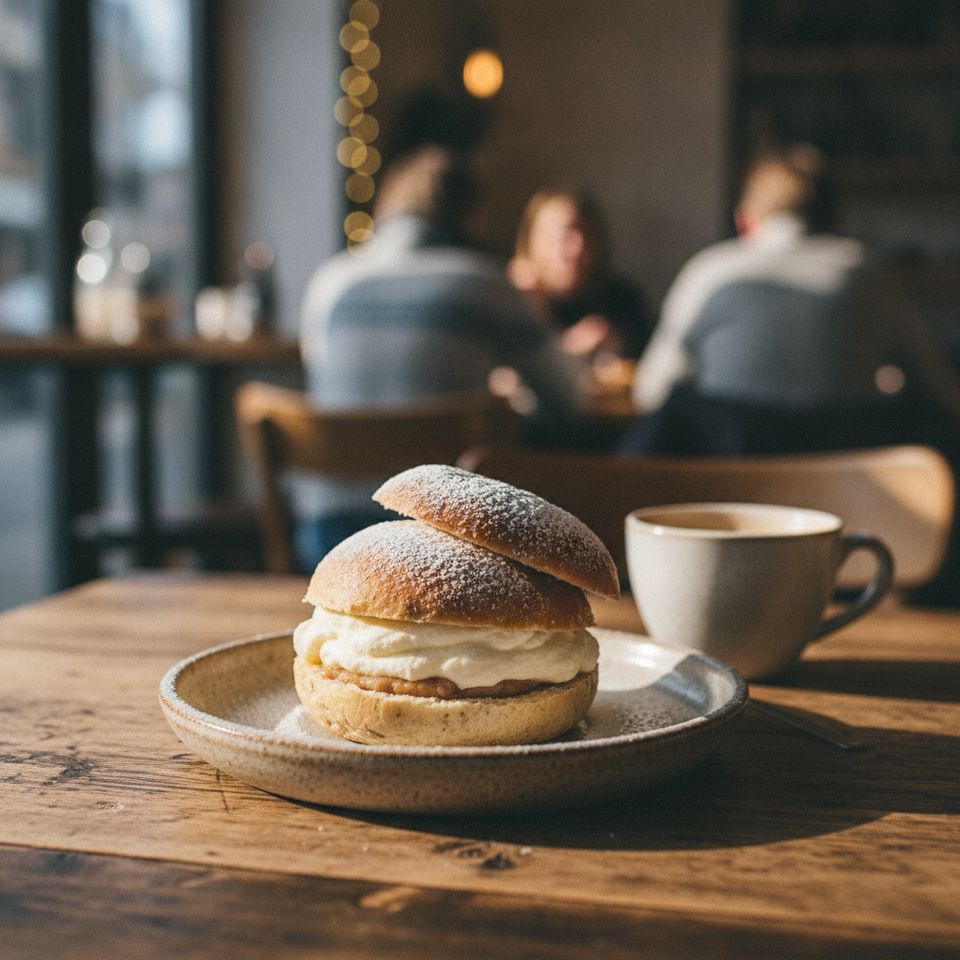
A semla is a cardamom-spiced wheat bun filled with almond paste and whipped cream, topped with a lid and dusted with icing sugar. It is one of Sweden's most beloved pastries, closely tied to the pre-Lenten season and the
What is a semla?
A semla is a cardamom-spiced wheat bun filled with almond paste and whipped cream, topped with a lid and dusted with icing sugar. It is one of Sweden's most beloved pastries, closely tied to the pre-Lenten season and the late-winter months.
The short answer
Picture a lightly sweet bun flavoured with cardamom. The lid is cut off, a dollop of almond paste is tucked inside, a generous swirl of whipped cream goes on top, the lid is set back in place, and icing sugar is sifted over it. Simple, classic and addictive.
The anatomy of a semla
A traditional semla has four parts:
- The bun (the bread): A wheat bun flavoured with cardamom. It should be airy but sturdy enough to hold the filling.
- The almond paste: Grated or softened almond paste, often mixed with a little of the bun's crumb and some milk or cream to make a creamy base.
- The cream: Whipped cream, ideally in generous amounts.
- The lid and icing sugar: The top of the bun is placed back on like a lid, and icing sugar is sifted over it.
When do you eat a semla?
Historically the semla belongs to the pre-Lenten season, the time before the fast, and was traditionally eaten on Shrove Tuesday (the Tuesday before Ash Wednesday). Shrove Tuesday falls on a different date each year because it follows the movable calendar of Easter. In 2027, Shrove Tuesday falls on 9 February.
These days the season is much longer. Many bakeries sell semlor from just after Christmas all the way until Easter, so you rarely have to wait for a single Tuesday.
A short history
The word semla comes from the Latin simila, meaning finely milled wheat flour. Originally the semla was a plainer fasting bun with no filling.
One common way to serve it was as hetvägg: the semla placed in a bowl of warm milk. This version still lives on among those who love the classic style.
A much-repeated connection is King Adolf Fredrik, who died in 1771 after a hearty meal that ended with several hetvägg. The story is often told, though exactly what caused his death is uncertain.
Classic versus modern variations
The classic semla looks just as described above: bun, almond paste, cream, lid and icing sugar.
In recent years, bakeries have competed in inventiveness. A few common variations:
- Semmelwrap: The filling rolled up in a thin flatbread instead of a bun.
- Princess semla: A semla wrapped in green marzipan, inspired by the princess cake.
- Semla milkshake: The flavours of a semla in liquid form, as a milkshake.
Many see these variations as playful experimentation, while others stand firmly by the original. Both have their place.
How do you eat a semla?
There is no single correct method, but here are two classic approaches:
- With a knife and fork: Neat and mess-free, good at a café.
- With your hands: Take a firm grip and bite straight through the lid, cream and almond paste. Keep a napkin ready.
If you want to be traditional, try hetvägg: place the semla in a deep dish and pour warm milk over it.
A short FAQ
Are semla and fastlagsbulle the same thing? Yes, fastlagsbulle is an older and more regional name for the semla.
Does the bun have to contain cardamom? Classically, yes, though there are versions without it. Cardamom gives the semla its typical flavour.
What is the difference between almond paste and marzipan? Almond paste contains more almond and less sugar than marzipan, and it is used in the semla's filling. Marzipan is mostly used for decoration, for example on the princess semla.
Can you freeze semlor? Yes, a semla freezes well. It is best to freeze it before the cream risks turning, and let it thaw in the fridge.
When is Shrove Tuesday in 2027? 9 February 2027.